
🌸 DIY Spring Homeowner Checklist #9: Flashing & Seals

🌸Part of our DIY Spring Homeowner Checklist Series
The Hidden Cause of Most Water Damage
When homeowners think about leaks, they usually think about shingles or siding.
But in reality…
👉 Most leaks start at flashing and sealed areas
These are the small, often overlooked parts of your home that protect the most vulnerable spots—where different materials meet.
🔍 What Is Flashing (And Why It Matters)
Flashing is the material installed around:
Chimneys
Roof valleys
Roof lines
Vents and exhaust outlets
Windows and doors
Its job is simple:👉 Keep water from getting into seams and joints
🔍 Common Signs of Flashing & Seal Failure
Look for:
Cracked or missing sealant
Gaps around vents or chimneys
Missing, rusted or lifting flashing
Water stains near seams
Deteriorating caulk around windows and doors
👉 These are early warning signs that water can get in.
💧 Where Problems Usually Start
Flashing and seal failures are most common around:
Roof penetrations (especially around roof vents, vent pipes)
Chimneys
Where siding meets trim
Around windows and doors
👉 These are high-risk areas because they’re constantly exposed to water and movement.
⚠️ Why This Gets Expensive Fast
When flashing or seals fail:
Water gets behind siding or roofing
Damage spreads inside walls
Mold and rot can develop
Repairs become much more extensive
👉 The problem is often hidden until it’s serious.
🧠 How to Check It Yourself
You can do a quick inspection in just a few minutes:
Walk around your home
Look closely at seams and joints
Check around chimneys, vents, and windows. To check these from the ground, use binoculars unless you are comfortable climbing onto your roof.
Look for cracks, gaps, or separation
Look for signs of moisture inside your home near the chimney or bathroom vents
👉 If something looks off—it probably is.
This DIY is ONLY FOR THOSE WHO ARE COMFORTABLE CLIMBING onto their roof. If you do not, please contact us or someone you trust to check this out for you.
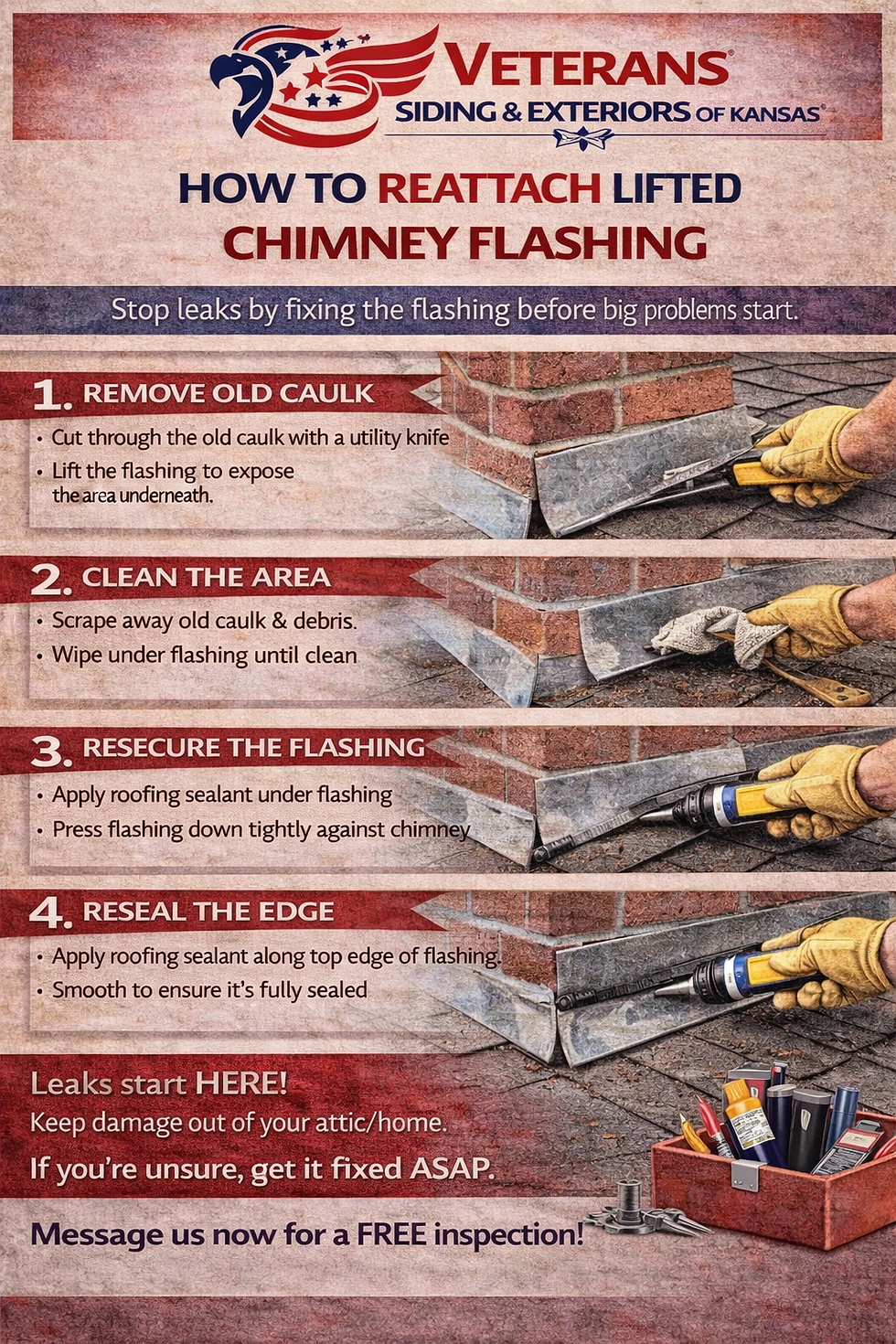
🛠️ 🔍 Common Signs of Seal Failure
👉 Early issues:
Cracked caulk = quick reseal
Minor gaps = simple repair
👉 Ignored issues:
Water intrusion
Structural damage
Interior repairs

🔗 Part of the Spring Checklist Series
Flashing and seal problems are often connected to:
👉 That’s why this is one of the most important items in your spring inspection.
💥 Don’t Wait Until You See a Leak
Most of what we’re seeing right now is still fixable.
But once water gets inside…
💸 Repairs get expensive FAST
📩 Free Inspections Available
We help homeowners catch these problems early.
✅ FREE inspections
✅ No pressure
✅ Honest answers
📩 Contact us or schedule online to get on the calendar this week.
🌸 Spring DIY Homeowner Checklist Series:
This is part of your Spring Homeowner Checklist Series:
👉 Together, these help you catch problems BEFORE they become expensive. And you can do them yourself to save money and protect your home
🗺️ Areas We Serve in Kansas
Veterans Siding & Exteriors of KS proudly serves homeowners throughout:
📍 Topeka, KS
📍 Meriden, KS
📍 Lawrence, KS
📍 Kansas City, KS
📍 Surrounding Kansas communities
👉 Looking for a contractor near you? Reach out—we may already service your area.
⭐ Trusted by Kansas Homeowners
We’re proud to be a trusted local contractor known for quality workmanship, honest recommendations, and helping homeowners create functional, beautiful spaces.
⭐ Organic 5-Star Reviews from Kansas homeowners
Veterans Siding & Exteriors of KS📞 (785) 433-5020
🏠 Popular Services
Homeowners contact us for:
✔ Whole-home siding (vinyl, wood, metal)
✔ Garage conversions
✔ Attic conversions
✔ Patio enclosures
✔ Home additions
✔ Kitchen remodeling
✔ Bathroom remodeling
✔ Windows & doors
✔ Interior layout remodeling
❓ Frequently Asked Questions
Q: What areas of my home should I inspect each spring?
A: Focus on siding, windows, doors, gutters, fascia and soffit, sealing flashing and sealing exterior vents, and any other areas where water can enter the home.
Q: What small exterior issues should homeowners fix right away?
A: Loose siding, cracked caulking, small gaps, peeling paint, and clogged gutters should be addressed early before they lead to larger repairs.
Q: What are common signs of hidden damage?
A: Watch for water stains, soft or rotted wood, mold or mildew, gaps around windows or doors, and unexplained drafts.
Q: Can small maintenance issues really turn into expensive repairs?
A: Yes. Small issues that are ignored can gradually lead to water intrusion, structural damage, rot, and larger replacement projects over time.
Q: How often should I inspect the exterior of my home?
A: A full visual inspection at least twice a year—typically spring and fall—is a good habit and can help catch problems early.
🏠 Stay Ahead of Bigger Problems
Owning a home comes with ongoing maintenance, but catching small issues early can save significant time and money later. Our Homeowner’s Checklist series is designed to help you learn what to look for and how to handle simple maintenance items before they become major repairs.
Need help with something beyond a small fix?
📞 Call or text: (785) 433-5020

Comments