
🌸 DIY Spring Homeowner Checklist #5: Exterior Paint

Why Peeling Paint Is More Than Just Cosmetic
Most homeowners see peeling paint and think…
“It just needs a fresh coat.”
But the truth is—peeling paint is often the first warning sign of a bigger problem.
Especially after winter and major temperature swings here in Kansas, your home’s exterior paint can start to fail—and when it does, your home becomes exposed to moisture.
Paint doesn’t fail all at once—it gives warning signs.
Look for:
Peeling or flaking paint
Cracking or splitting
Bubbling or blistering areas
Faded or chalky surfaces
Exposed wood or siding underneath
👉 These are signs your home’s protective barrier is breaking down.
⚠️ What Peeling Paint Really Means
Paint isn’t just for looks—it protects your home from the elements.
When it starts to fail:
Moisture can get behind siding
Wood can begin to rot
Surfaces can warp or deteriorate
Damage can spread underneath where you can’t see it
👉 What looks like a small cosmetic issue can quickly turn into structural damage.
💧 Why Spring Is the Time This Shows Up
Spring is when we see the most paint issues because of:
Freeze/thaw cycles
Rapid temperature changes
Moisture buildup from winter
Increased humidity and rain
👉 All of this puts stress on your home’s exterior surfaces.
🛠️ What You Can Check Yourself
A quick DIY inspection only takes a few minutes.
Walk around your home and:
Look closely at siding and trim
Check around windows and doors
Pay attention to edges, seams, and corners
Look for areas that get the most sun or moisture
👉 These are the first places paint tends to fail.
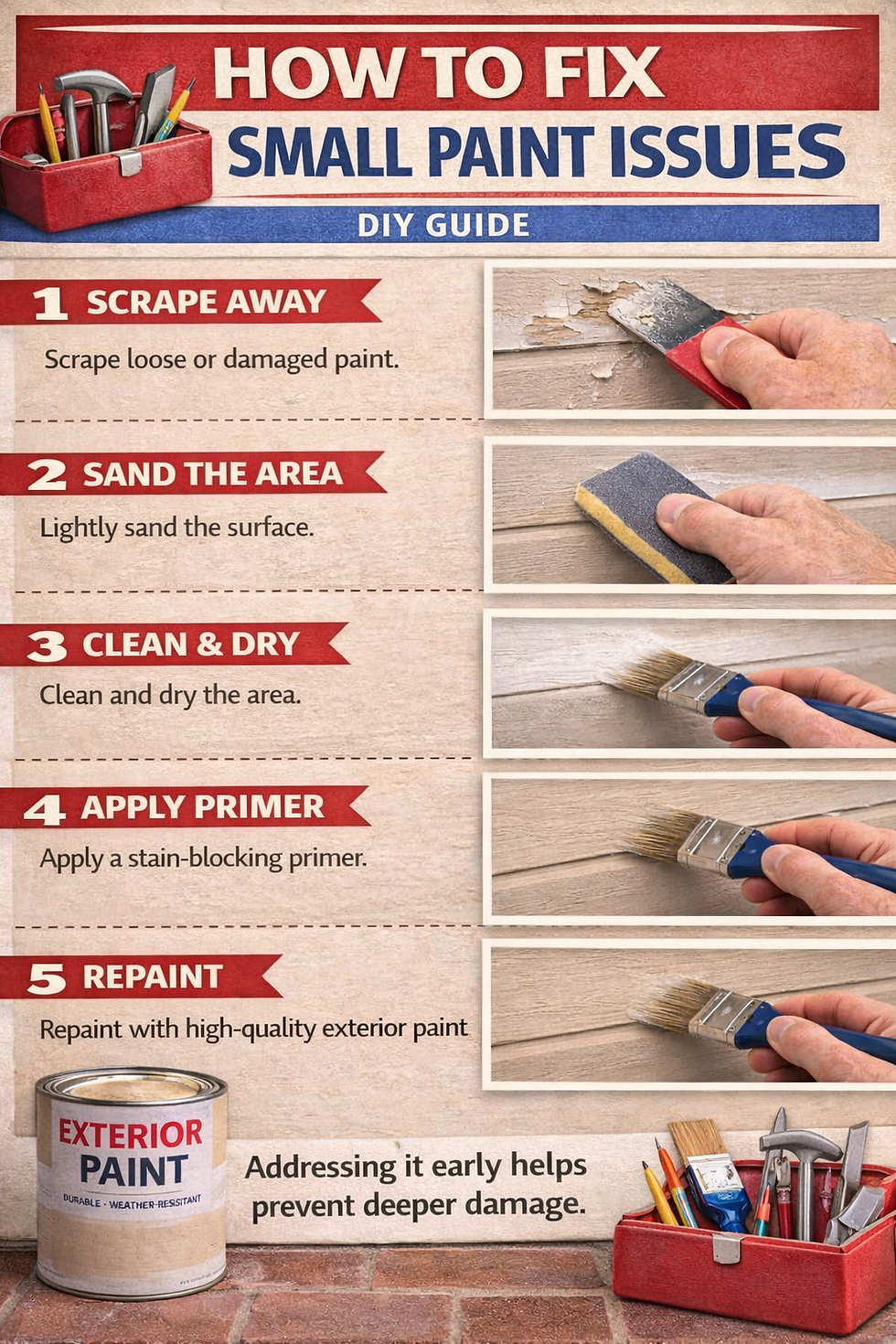
🧰 How to Fix Small Paint Issues (DIY)
If caught early, peeling or cracked paint can often be fixed without major work:
Scrape away loose or damaged paint
Lightly sand the surface
Clean and dry the area
Apply a stain-blocking primer
Repaint with high-quality exterior paint (take a paint chip to any home improvement store and they should be able to match it) Just know it will be a slighter different shade depending on how long the current paint has been on your home. But will also protect you from a very large repair.
👉 Addressing it early helps prevent deeper damage. Save the image below for future reference
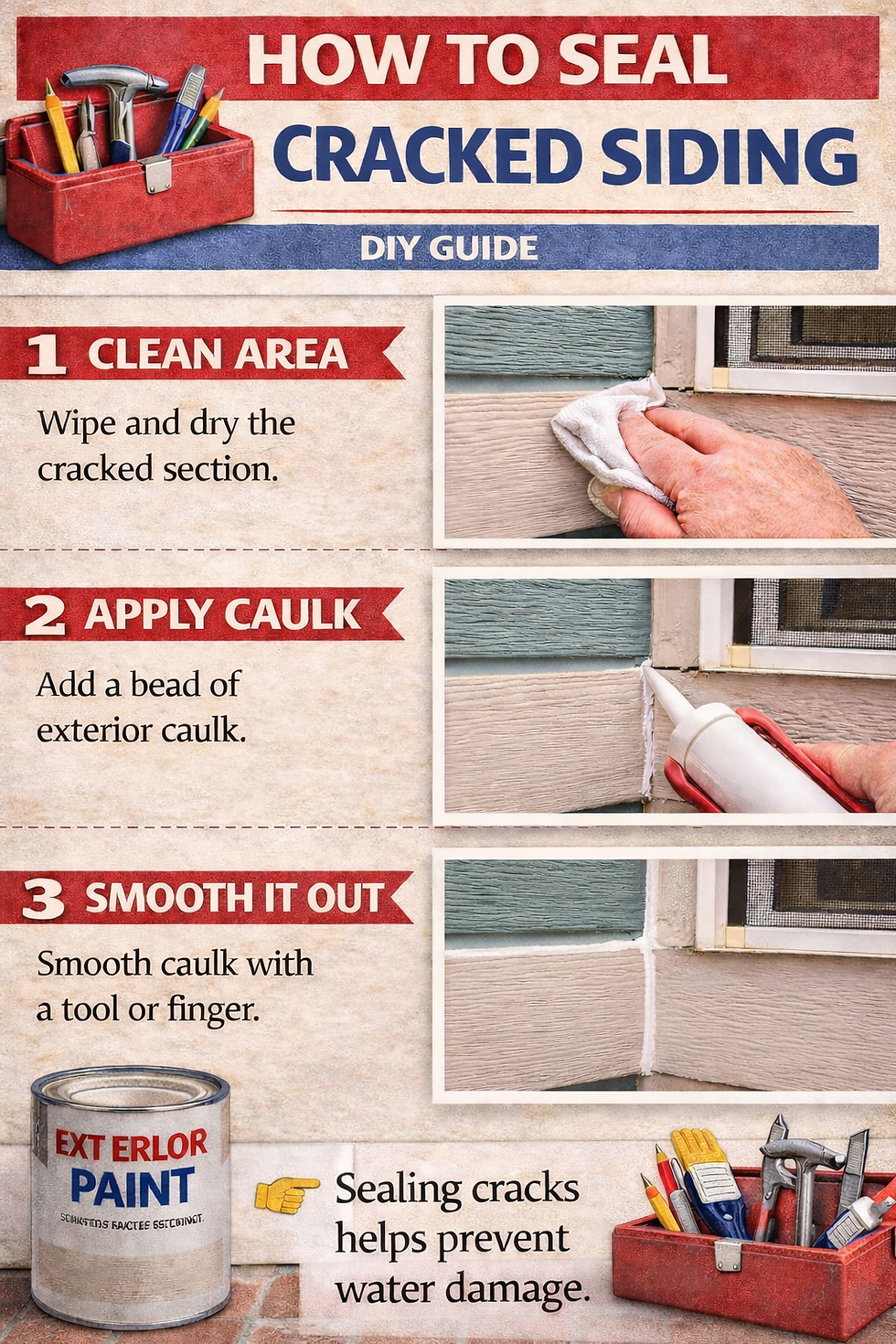
🧰 How to Fix Small Crack or Seam Issues (DIY)
If you notice cracking where siding seams meet or around trim or windows, it’s important to seal it before water gets behind your exterior. This has to be done after at least 1 week of no rain to make sure you do not trap moisture in.
Start by cleaning the area thoroughly—wipe away dirt, debris, and any loose paint so the surface is dry and ready to bond. Next, apply a steady bead of high-quality exterior caulk directly into the crack, making sure it fully fills the gap. Finally, smooth the caulk using your finger or a finishing tool to create a tight seal and clean appearance. Taking a few minutes to fix small cracks like this can prevent moisture intrusion, wood rot, and much more expensive repairs down the road.
🚿 Don’t Forget High-Moisture Areas
Paint issues aren’t just outside.
Areas like:
👉 Are more prone to peeling due to moisture exposure.
If you can fix small areas yourself, you can often use the same process to address peeling paint above a shower or tub before it spreads.
💸 Why Acting Early Saves You Money
Peeling paint rarely stays a small problem.
Left untreated, it can lead to:
Larger, more expensive repairs
👉 The sooner you address it, the more you save.
🔗 Related Spring Checklist Items
Paint issues are often connected to:
👉 That’s why it’s part of a full spring inspection—not just a standalone issue.
💥 Don’t Wait Until It Gets Worse
Most of what we’re seeing right now is still fixable.
But not for long.
If you notice peeling, cracking, or exposed surfaces—it’s worth getting it checked.
🌸 Spring DIY Homeowner Checklist Series:
This is part of your Spring Homeowner Checklist Series:
👉 Together, these help you catch problems BEFORE they become expensive. And you can do them yourself to save money and protect your home
📩 Free Inspections Available
We help homeowners catch these problems early—before they turn into expensive repairs.
✅ FREE inspections
✅ No pressure
✅ Honest answers
📩 Contact us or schedule online to get on the calendar this week.
🗺️ Areas We Serve in Kansas
Veterans Siding & Exteriors of KS proudly serves homeowners throughout:
📍 Topeka, KS
📍 Meriden, KS
📍 Lawrence, KS
📍 Kansas City, KS
📍 Surrounding Kansas communities
👉 Looking for a contractor near you? Reach out—we may already service your area.
⭐ Trusted by Kansas Homeowners
We’re proud to be a trusted local contractor known for quality workmanship, honest recommendations, and helping homeowners create functional, beautiful spaces.
⭐ Organic 5-Star Reviews from Kansas homeowners
Veterans Siding & Exteriors of KS📞 (785) 433-5020
🏠 Popular Services
Homeowners contact us for:
✔ Whole-home siding (vinyl, wood, metal)
✔ Garage conversions
✔ Attic conversions
✔ Patio enclosures
✔ Home additions
✔ Kitchen remodeling
✔ Bathroom remodeling
✔ Windows & doors
✔ Interior layout remodeling
❓ Frequently Asked Questions
Q: What areas of my home should I inspect each spring?
A: Focus on siding, windows, doors, gutters, fascia and soffit, sealing flashing and sealing exterior vents, and any other areas where water can enter the home.
Q: What small exterior issues should homeowners fix right away?
A: Loose siding, cracked caulking, small gaps, peeling paint, and clogged gutters should be addressed early before they lead to larger repairs.
Q: What are common signs of hidden damage?
A: Watch for water stains, soft or rotted wood, mold or mildew, gaps around windows or doors, and unexplained drafts.
Q: Can small maintenance issues really turn into expensive repairs?
A: Yes. Small issues that are ignored can gradually lead to water intrusion, structural damage, rot, and larger replacement projects over time.
Q: How often should I inspect the exterior of my home?
A: A full visual inspection at least twice a year—typically spring and fall—is a good habit and can help catch problems early.
🏠 Stay Ahead of Bigger Problems
Owning a home comes with ongoing maintenance, but catching small issues early can save significant time and money later. Our Homeowner’s Checklist series is designed to help you learn what to look for and how to handle simple maintenance items before they become major repairs.
Need help with something beyond a small fix?
📞 Call or text: (785) 433-5020


Comments